
ArogyaSync - Clinical Monitoring Platform
Product ownership for a five-service clinical platform in rural healthcare.
Services Shipped
Uptime SLA Defined
Integrated Partners
Tools & Methods
The problem
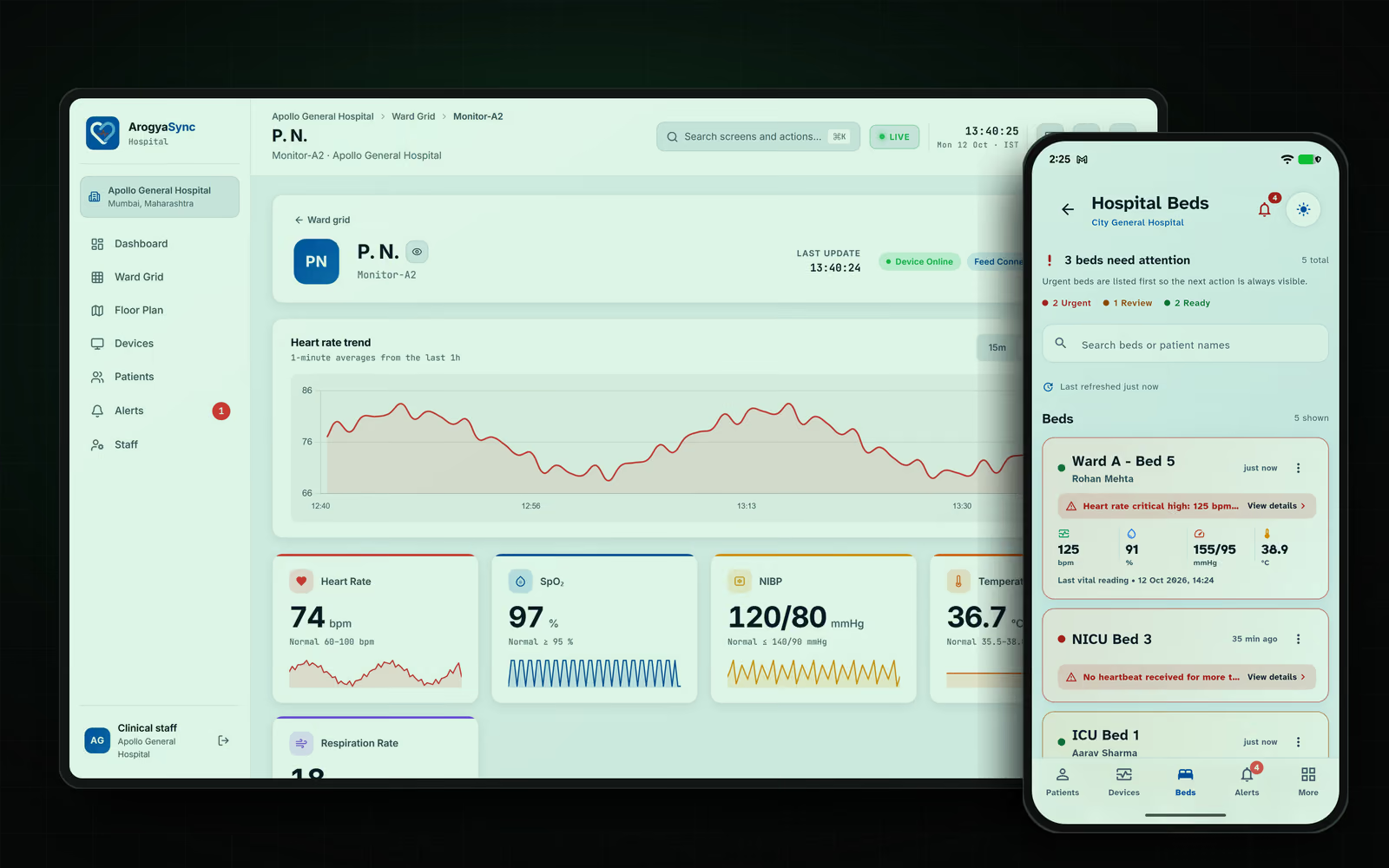
The health platform had to serve four groups: field health workers, hospital administrators, device managers, and insurance officers. Each group had different needs, so a weak product definition would fail in practice even if the code worked.
The challenge
Rural and semi-urban clinics were generating patient vitals on paper with no structured digital layer. The product had to account for four user groups with different priorities and levels of technical experience, then give the engineering team enough detail to build the Go API, Flutter app, three React dashboards, blockchain anchor service, and insurance portal. The audit trail also required clinical operations, legal, and engineering to agree on what counted as a tamper-proof medical event.
Product Requirements Document
PRODUCT REQUIREMENTS DOCUMENT
ArogyaSync - Clinical Health Platform
Varun Cumbanungam · AI Product Manager · Oralens HealthCare (2023)
Doc ID
AGS-PRD-V1
Status
Approved
Owner
Varun C.
Date
2023
Version
1.0
Problem Statement
Rural clinics generate vitals on paper - 12-24h sync delays and data loss during outages. The platform must handle concurrent writes while guaranteeing offline delivery.
Primary Users
Field Health Worker
Vitals capture, offline sync, real-time alerts
Hospital Admin
Real-time monitoring, report export
Insurance Verifier
Eligibility checks, blockchain audit trail
Device Manager
Fleet provisioning, OTA, status dashboard
Core Services
- Go/Gin REST API - clinical CRUD, WebSocket, auth
- Flutter app - offline-first sync queue
- Hospital dashboard - real-time vitals monitoring
- Insurance portal - CSV eligibility + batch jobs
- Blockchain anchor - Polygon Amoy audit trail
Key Acceptance Criteria
- AC-1API uptime SLA: 99.9% measured monthly
- AC-2p95 API latency under 150ms
- AC-3Offline queue delivers on connectivity restore
- AC-4Blockchain anchor fires within 30s of record
- AC-5Insurance CSV verification under 5 min/batch
- AC-6Hospital dashboard vitals stream under 2s end-to-end
Sprint Milestones
- S1Go API core + PostgreSQL + auth
- S2Flutter app + offline sync queue
- S3Hospital dashboard + WebSocket
- S4Blockchain anchor + Polygon deploy
- S5Insurance portal + go-live
Product Artefacts Delivered
- PRD V1 - personas, services, acceptance criteria
- API spec - OpenAPI 3.0 documentation
- Data model - PostgreSQL + blockchain log
- Sprint plans S1-S5 with capacity allocation
CONFIDENTIAL · ArogyaSync PRD · Property of Oralens HealthCare
PRD · API Spec · Data Model · Sprint Plans S1-S5
Full PRD and supporting artefacts available upon request
Results
Shipped 5 production services to a live pilot network of field health workers. API uptime SLA of 99.9% with p95 latency under 150 ms defined and met. Blockchain medical record anchoring on Polygon adopted for insurance audit trail, cutting manual cross-referencing from days to minutes. The hospital and insurance dashboards were delivered as separately deployable portals with independent auth scopes - a product decision that reduced onboarding friction for partner institutions who wanted only a subset of the platform.
Gallery & Demos
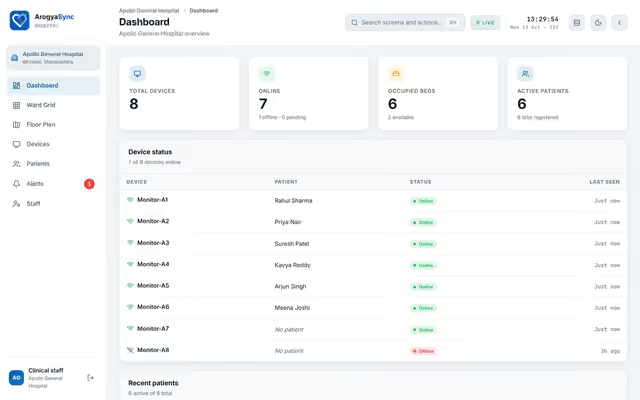
Platform Overview Dashboard
The hospital landing view: patients, devices and alerts in one place.
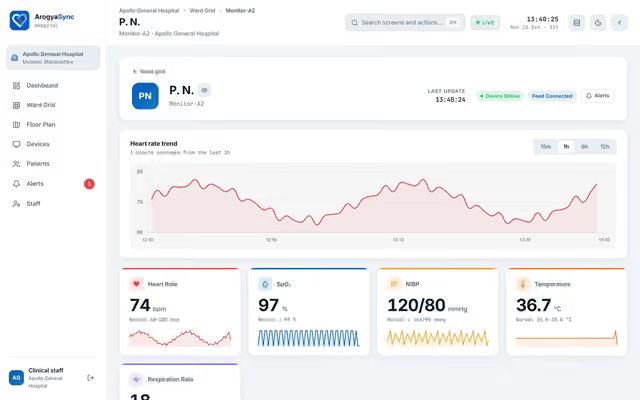
Live Patient Monitor
Real-time vitals and a one-hour trend for a single monitored bed.
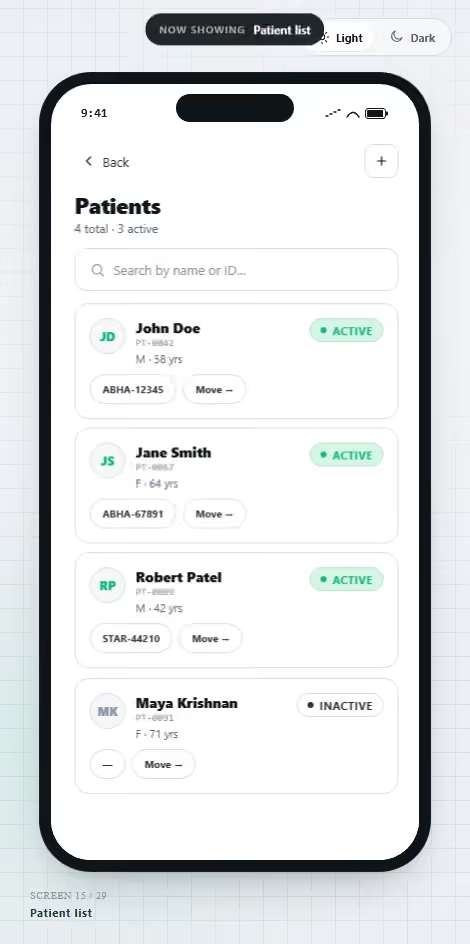
Mobile App - Patient List
Field health workers see their assigned patients and sync status.
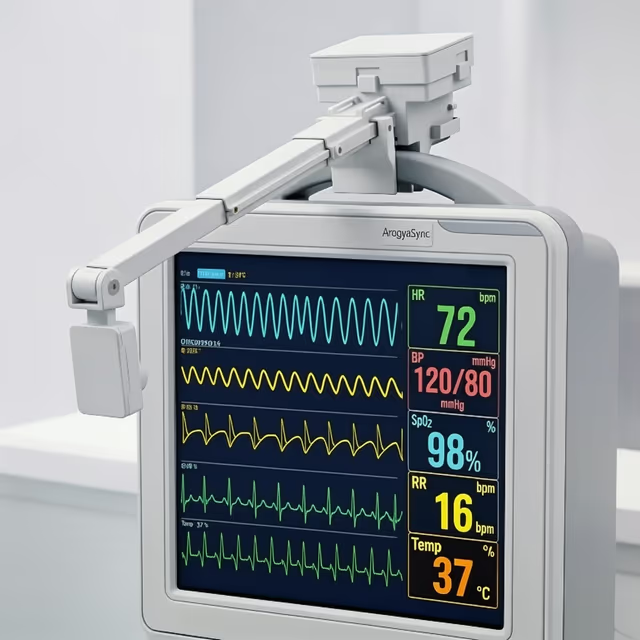
IoT Vitals Module - Hospital Display
Edge device showing real-time patient vital signs integrated into hospital monitoring system.
Click any image or video to expand · ← → keys navigate
Live Demos
More from ArogyaSync Technologies Pvt. Ltd.
ArogyaSync Platform
A clinical health platform with a Go REST API, Flutter mobile app, React hospital dashboard, blockchain record anchoring, and insurance verification portal. Deployed on AWS.
ArogyaLens - Unified Health Platform
A multilingual healthcare platform connecting patient records, doctor workflows, hospital operations, appointments, pharmacy, labs, telemedicine, and oral-health screening.
ArogyaLens - Unified Health Platform
Product ownership for a health platform spanning 15+ modules, 13 languages, telemedicine, and oral-health screening. Authored the PRD, SRS, and technology specification.
Interested in this work?
I can walk through the architecture and code during an interview.